Stakeholders Call for Urgent Action on SDGs 2030 Deadline
by admin on | 2026-04-26 18:03:48
Share: Facebook | Twitter | Whatsapp | Linkedin Visits: 36
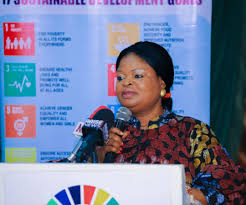
Stakeholders Call for Urgent Action on SDGs 2030 Deadline
By Ahmad Sirajo Makama, Abuja
Stakeholders in the humanitarian space have called for deliberate efforts and stronger collaboration to meet the fast-approaching 2030 deadline for the achievement of the Sustainable Development Goals (SDGs).
Minister for Humanitarian Affairs and Poverty Reduction, Dr. Bernard Doro, made the call at the inaugural assembly and induction ceremony of SDG advocates organised by Community Impact Affinity (CIA) in Abuja.
Represented by his Technical Adviser on Poverty Reduction, Mr. Augustine Ajijelek, Dr. Doro stated that the Ministry’s commitment to SDG 1 (No Poverty) and the broader humanitarian architecture of Nigeria remains absolute, stressing the critical role of SDG advocates in driving real impact beyond speeches and slogans.
“It is strengthening institutions so they deliver with speed, equity, and accountability. It is bridging the gap between policy and people. It is ensuring that no Nigerian is left behind.”
He noted that Nigeria continues to face complex and intersecting challenges, including multidimensional poverty, humanitarian crises, climate vulnerability, and the lingering effects of conflict and displacement.
“Far too many of our citizens, especially women, children, and youth, still grapple with food insecurity, limited access to basic services, and the trauma of gender-based violence. Institutions tasked with delivering hope sometimes struggle under the weight of coordination gaps, resource constraints, and the sheer scale of need.
“Together, we shall prove that when government, transnational NGOs like CIA, and passionate SDG advocates align, progress is not only possible but practically unstoppable.”
According to him, the Federal Government is moving beyond fragmented interventions to a more integrated approach under its “One Humanitarian, One Poverty Response System” (OHOPRS), which serves as the cornerstone of its strategy.
“Through OHOPRS, we are building a system where a displaced mother in the North-East receives not just emergency food today, but skills training and livelihood support tomorrow; where a youth in the South-West is linked instantly to digital empowerment opportunities; and where civil-military collaboration is embedded in every response to foster lasting peace. This is humanity at the core, institutions strengthened not for their own sake, but for the sustainable community impact they must deliver.”
Dr. Doro urged SDG advocates to take ownership of local contexts, champion institutional collaboration by breaking down silos, and focus on delivering measurable results.
For its part, the Nigeria Immigration Service (NIS) said it is taking deliberate steps under the current administration to become a model institution by building capacity for gender-responsive service delivery and digitising its operations to reduce human contact and corruption at borders and across its formations.
Represented by Assistant Comptroller General, Migration, Azuka-Mimi Halliday, the Comptroller General, Kemi Nanna Nandap, explained that these are institutional investments that produce better officers, improved service delivery, and stronger communities.
She noted that security without humanity creates fear, while security with humanity builds trust and legitimacy.
According to her, border governance is often viewed solely through the lens of security and control, but real security is human security. She added that real governance is people-centred, and real development is measured by how institutions impact lives at the community level.
“Every passport we issue, every border we manage, every migrant we protect is an act of institutional responsibility with direct bearing on the United Nations Sustainable Development Goals.”
The Founder of Community Impact Affinity, Mr. Wilson Babangida, said the organisation is driven by the understanding that no single project can succeed in isolation.
He explained that CIA, being community-centric, is aligning its goals with those of the Humanitarian Ministry and other stakeholders to ensure that the most vulnerable populations are reached.
“We have bases across communities, and we understand the types of programmes that can reduce poverty, even if we cannot eradicate it completely.”
Responding to questions on funding challenges, Babangida said CIA has not received any official funding, noting that its programmes have been sustained through volunteer contributions, both in cash and in kind, from individuals who support its mission without expectations.
He added that CIA currently champions eight out of the 17 United Nations Sustainable Development Goals.
The event was themed: “Humanity at the Core: Strengthening Institutions for Sustainable Community Impact.”
Trending Stories
-
 Reps Summon Six FCT Councils Over N100bn Audit
-
 Tinubu: Nigeria Slashes Reliance on Crude Oil Revenues
-
 Education Minister Pledges 10 Million Votes for Tinubu
-
 Political Reconciliation Gains Ground as Wike, Fubara Camps Meet
-
 INEC Records Over 103 Million Registered Voters Ahead 2027 Elections
-
 Aircraft Accident: NAF Activates Search, Rescue Operation
-
 NGF Mourns Victims of Nigerian Air Force Aircraft Crash
-
 Customs Warns Against Petroleum Smuggling, Vows Relentless Enforcement
Advertisement