Presidency Reaffirms Tinubu Administration’s Openness to Scrutiny, Facts
by admin on | 2026-08-29 17:26:54
Share: Facebook | Twitter | Whatsapp | Linkedin Visits: 31
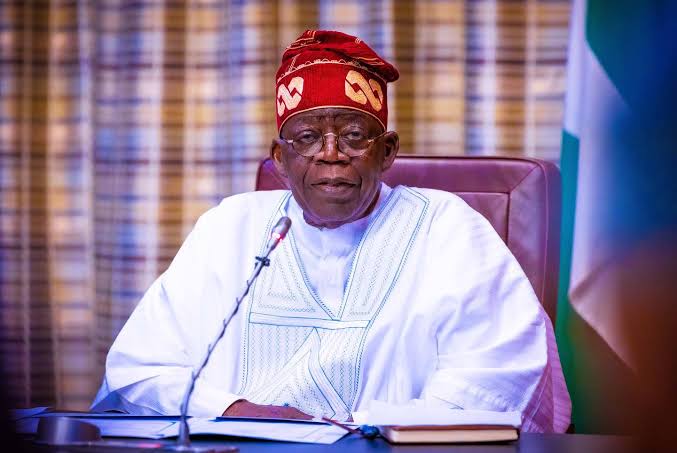
Presidency Reaffirms Tinubu Administration’s Openness to Scrutiny, Facts
By Ahmad Sirajo Makama, Abuja
The Presidency has reaffirmed the openness of President Bola Ahmed Tinubu’s administration to scrutiny, maintaining that its performance should be assessed on measurable outcomes in security, economic recovery, border management and citizens’ welfare, while insisting that such assessments must be based on facts.
The Presidency stated this in response to former Vice President and presidential candidate of the African Democratic Congress (ADC), Atiku Abubakar, over his declaration that he would immediately “open the borders” if elected President.
In a statement signed by the Special Adviser to the President on Media and Public Communication, Mr Sunday Dare, the Presidency maintained that Nigeria’s land borders are already open, noting that the Federal Government announced the reopening of most of them on March 14, 2024, and has not reversed the decision.
It also cited the reopening of the Kamba border in Kebbi State by President Tinubu on February 14, 2026, which it said had yielded economic and diplomatic benefits.
The Presidential aide therefore challenged the former Vice President to clarify whether his proposal refers to relaxing existing border controls and, if so, explain the safeguards he would introduce against terrorism, arms trafficking, smuggling, human trafficking and other forms of transnational organised crime.
“If he means he would relax existing border controls, then Nigerians deserve to know precisely which controls he intends to remove, why he considers their removal necessary, and what safeguards his administration would deploy,” the statement said.
Dare stressed that an open border should not be confused with an uncontrolled one, explaining that effective border management requires immigration and customs controls, intelligence-sharing, surveillance technology and coordinated security operations to facilitate legitimate movement and trade while preventing exploitation by terrorists and criminal networks.
Citing the Global Terrorism Index 2026, the Presidential aide underscored the security implications of porous borders, particularly against the backdrop of developments across the Sahel and Lake Chad Basin.
“The security reality is compelling. The Global Terrorism Index 2026 indicates that approximately 41 per cent of terrorist attacks occur within 50 kilometres of an international border, while about 64 per cent occur within 100 kilometres. Borderlands are particularly vulnerable where difficult terrain, limited state presence and weak coordination create opportunities for terrorist organisations to operate.
“The implications for Nigeria are obvious. As domestic insurgencies evolve into increasingly networked and transnational terrorist threats, effective border management becomes an indispensable component of national security. Terrorists and criminal networks exploit sovereign boundaries precisely because security forces cannot simply pursue them across international borders without appropriate cooperation and legal frameworks,” he added.
The Presidency further maintained that while political contestation is legitimate in a democracy, discussions on national security and the economy should be grounded in facts, institutional understanding and credible policy alternatives.
Dare consequently challenged Atiku to explain how he intends to improve border surveillance, strengthen intelligence-sharing with neighbouring countries, modernise customs and immigration operations, protect border communities and deepen regional cooperation against terrorism and organised crime.
“Consequently, Nigeria's focus on the Northeast and Northwest corridors, including the coordinated deployment of the Armed Forces and other security institutions, should not be misconstrued as evidence of closed borders. It reflects responsible border security.
“The former Vice President, as an experienced politician who has previously occupied the second-highest office in the country, should know this distinction,” he said.
The Presidential aide also emphasised the need to balance legitimate commerce and movement with effective national security.
“Nigeria's borders must be open to legitimate commerce and movement, but secure against terrorists and criminals. They must be monitored with technology, led by intelligence, and integrated into the country's broader national-security and economic strategy.
“That is the policy conversation Nigerians deserve. But, increasingly, the former Vice President's public outings and policy pronouncements raise a more fundamental question: what new and credible contribution does he intend to make to Nigeria's development that is not already contained in the reform trajectory of the present administration?” Dare added.
He further challenged Atiku to present what the Presidency considers a coherent alternative policy agenda rather than focusing on reversing, reopening or renaming existing initiatives.
“Rather than presenting Nigerians with a coherent alternative, Atiku appears increasingly preoccupied with promising to reverse, reopen, or rename initiatives already being implemented,” Dare said.
Trending Stories
-
 Reps Summon Six FCT Councils Over N100bn Audit
-
 Tinubu: Nigeria Slashes Reliance on Crude Oil Revenues
-
 Education Minister Pledges 10 Million Votes for Tinubu
-
 Political Reconciliation Gains Ground as Wike, Fubara Camps Meet
-
 INEC Records Over 103 Million Registered Voters Ahead 2027 Elections
-
 Aircraft Accident: NAF Activates Search, Rescue Operation
-
 NGF Mourns Victims of Nigerian Air Force Aircraft Crash
-
 Customs Warns Against Petroleum Smuggling, Vows Relentless Enforcement
Advertisement