Abbas Urges Nigerians to Support Tinubu’s Economic Reforms
by admin on | 2026-10-15 11:17:10
Share: Facebook | Twitter | Whatsapp | Linkedin Visits: 65

Abbas Urges Nigerians to Support Tinubu’s Economic Reforms
By Ahmad Sirajo Makama
The Speaker of the House of Representatives, Tajudeen Abbas, has urged Nigerians to sustain support for President Bola Tinubu’s economic reforms, warning that abandoning or reversing the policies midway could undermine their anticipated benefits.
He maintained that Nigeria must not abandon its economic recovery efforts after enduring the hardships associated with the reforms process.
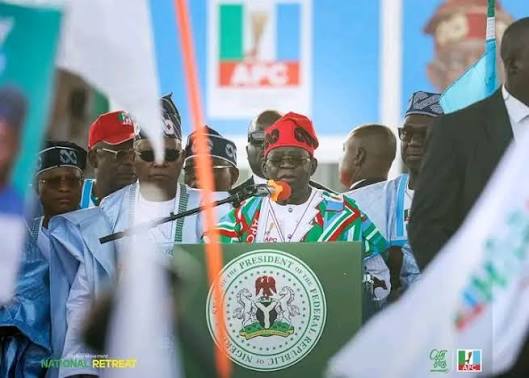
Speaking at the inauguration of the All Progressives Congress (APC) Presidential Campaign Council in Abuja, the Speaker explained that the administration’s previous years in office had focused on restoring economic stability, addressing longstanding structural deficiencies and reinforcing the country’s fiscal position.
He emphasised that the next stage of the administration’s reform agenda will prioritise translating the progress recorded into tangible improvements in citizens’ living conditions through job creation, infrastructure expansion and more efficient delivery of essential public services.
Abbas acknowledged the economic strain on households and businesses but stressed that sustaining the reforms was essential to translating fiscal gains and improving economic indicators into tangible benefits for Nigerians.
"The first term confronted instability. The first term expanded public revenue. The second term must turn revenue into public value.
"Nigeria has paid the price of reform. Nigeria must now receive the dividend of consolidation", Abbas declared.
Acknowledging the hardships Nigerians have endured, Abbas warned that reversing the reforms could erode existing gains and undermine the benefits of sacrifices.
The Speaker maintained that sustaining the ongoing economic reforms, rather than reversing them, would be critical to consolidating progress and ensuring that the benefits translate into meaningful improvements in the lives of Nigerians.
He highlighted that the administration's achievements should ultimately be assessed beyond increased public revenues and positive economic indicators, with greater emphasis on household welfare, sustainable employment and expanded economic opportunities.
Emphasising the administration's economic performance, Abbas referenced figures he attributed to recent World Bank reports, including Nigeria's 4.2 per cent economic growth in the first half of 2026 and foreign reserves exceeding $54 billion in September.
He also cited a current account surplus of $12 billion, non-oil exports surpassing $6 billion in 2025 and significant increases in government revenue across the federation.
According to the Speaker, federal revenue recorded a 69 per cent increase in real terms between 2023 and 2025, while allocations available to state governments rose by 93 per cent during the same period.
Abbas explained that although the figures indicated a strengthening of Nigeria's fiscal and external positions, the greater responsibility remained ensuring that the economic improvements delivered tangible relief and better living conditions for citizens.
He consequently urged members of the ruling All Progressives Congress (APC) and supporters of the administration to substantiate its achievements with credible evidence and measurable results rather than relying on political rhetoric.
"An ambassador does not invent evidence," he said, stressing the importance of presenting the administration's record accurately and convincingly to the electorate.
"When opponents raise their voices, we must raise the quality of our arguments", Abbas added.
He also challenged opposition political parties to present credible and workable alternatives to the administration's economic policies rather than merely capitalise on public dissatisfaction with the difficult adjustment process.
Highlighting the legislative contributions of the 10th National Assembly, Abbas said the House of Representatives had played a pivotal role in advancing the administration’s reform agenda through the enactment of key legislation and sustained parliamentary engagement.
He cited the student loan scheme, the revised national minimum wage, tax legislation and the Electoral Act 2026 as major legislative measures designed to strengthen governance, address national priorities and improve institutional effectiveness.
Providing an overview of the House’s legislative performance, the Speaker disclosed that 2,747 bills had been introduced since its inauguration, with 363 passed and more than 70 receiving presidential assent.
Abbas further identified ongoing efforts to establish state police as a significant legislative priority, noting that the proposed framework was intended to strengthen Nigeria’s security architecture and enhance responses to emerging threats.
He reaffirmed the National Assembly’s commitment to providing the legal and institutional backing necessary to sustain economic reforms, while strengthening legislative oversight to promote accountability and effective policy implementation.
Looking ahead to the 2027 general election, the Speaker described the exercise as an opportunity for Nigerians to assess the administration’s performance and the progress achieved in addressing the country’s development challenges.
He maintained that the overriding consideration should be preservation and building on existing gains, ensuring that the sacrifices associated with economic reforms often translate into enduring prosperity and improved living standards.
Trending Stories
-
 NELFUND Urges Defence Ministry To Embrace Student Loans
-
 Nigeria Seeks Decriminalisation Of Attempted Suicide
-
 Reps Threaten Sanctions Against Four Polytechnics Over Financial Irregularities
-
 Tinubu Moves Closer To Establishment Of State Police
-
 Fani-Kayode Raises Concerns Over Killings of Nigerians in South Africa
-
 World Bank Identifies $4 Trillion Financing Gap For Developing Countries
-
 Tinubu’s 2027 Re-Election Campaign Gains Momentum in Anambra
-
 Tinubu Approves Kebbi Inland Dry Port Operations
Advertisement