Nigeria Steps Up Efforts to Strengthen Cybersecurity Framework
by admin on | 2026-10-28 11:49:08
Share: Facebook | Twitter | Whatsapp | Linkedin Visits: 17
Nigeria Steps Up Efforts to Strengthen Cybersecurity Framework
By Ahmad Sirajo Makama
Nigeria is stepping up efforts to strengthen its cybersecurity framework, protect citizens against artificial intelligence-driven threats and safeguard the nation’s digital infrastructure.
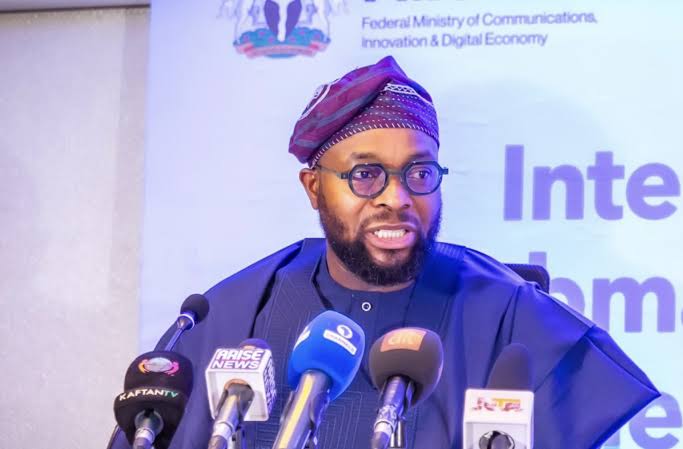
The Director-General of the National Information Technology Development Agency (NITDA), Kashifu Inuwa Abdullahi, made this known at the second edition of the International Cybersecurity Conference 2026 in Abuja, where stakeholders examined strategies for building cyber resilience in the age of artificial intelligence.
The conference, themed “Cyber Resilience in the Age of AI: Defending Minds, Networks and Nations,” brought together government officials, legislators, cybersecurity experts, industry leaders and international participants to discuss emerging digital threats and possible solutions.
The NITDA boss said cyber resilience has gone beyond traditional cybersecurity, which focuses primarily on preventing attacks, to include the ability of individuals, organisations and nations to recover from attacks and adapt to emerging threats.
He warned that artificial intelligence had become a sophisticated tool for both cyber criminals and defenders, making it increasingly difficult to distinguish authentic digital content from manipulated information.
“Today, cybersecurity is beyond infrastructure. We need to look at how we can defend our minds,” he said, noting that attackers increasingly exploit human vulnerabilities because manipulating individuals can be easier than breaching technical systems.
The NITDA chief highlighted the growing risks associated with AI-generated voices, videos and images, as well as sophisticated social engineering capable of manipulating public opinion and influencing what people see, believe and share online.
He stressed the need to develop mechanisms for identifying authentic content, improving public awareness and strengthening citizens’capacity to recognise digital deception.
Abdullahi also called for a coordinated national approach to cybersecurity, emphasising that interconnected networks meant a breach in one organisation could compromise other institutions and critical services.
He disclosed that NITDA had been working with the Office of the National Security Adviser and the National Assembly to review Nigeria’s cybercrime legislation and strengthen the country’s legal and institutional capacity to respond to emerging threats.
In his keynote Address, the Executive Vice Chairman(EVC) of the Nigerian Communications Commission(NCC), Aminu Maida, said the increasing sophistication of AI-driven attacks had made cybersecurity a national imperative.
The EVC who was represented by the Executive Commissioner Technical Services, Engr. Abraham Oshadami observed that telecommunications infrastructure had become central to Nigeria’s economy, supporting financial transactions, public services, business operations and everyday communications.
He warned that cybercriminals were increasingly deploying AI-powered phishing, automated credential attacks, deepfakes and adaptive malware to exploit vulnerabilities at speeds that could outpace conventional security responses.
Maida added that the NCC had established a Computer Security Incident Response Team (CSIRT) to facilitate real-time intelligence sharing and strengthen incident reporting across the telecommunications sector.
He urged telecommunications operators to adopt zero-trust security architectures, continuously assess AI systems and build networks capable of recovering safely from attacks.
The EVC also called for stronger collaboration among regulators, telecommunications companies, financial institutions, security agencies and international partners, arguing that an attack on one sector could have consequences for the wider national economy.
In his remarks, the Attorney-General of the Federation, Lateef Fagbemi, said Nigeria needed a legal framework capable of responding effectively to rapidly evolving cyber threats.
The Attorney-General who was represented by the Director of Public Prosecutions at the Federal Ministry of Justice, Rotimi Iseoluwa Oyedepo highlighted the growing threat posed by business email compromise, cryptocurrency-enabled fraud, sextortion, child exploitation and AI-assisted deception.
He said the Federal Ministry of Justice had advanced work on a draft executive bill aimed at strengthening Nigeria's cybercrime legal framework.
According to him, the proposed reforms seek to address emerging technologies, facilitate the preservation and exchange of electronic evidence, support investigations and prosecutions, and uphold human rights and the rule of law.
“Security must protect liberty, not become an excuse to undermine it,” the Attorney-General stated.
He also reaffirmed the ministry’s commitment to a whole-of-government and whole-of-society approach to cybersecurity, adding that recommendations from the conference would inform further engagements with the National Assembly.
The Chairman of the Senate Committee on ICT and Cybersecurity, Senator Shuaib Afolabi Salisu called for greater coordination among government agencies and the development of a national cyber resilience index to measure the cybersecurity readiness of organisations.
Salisu said Nigeria possessed considerable intellectual capacity in technology but needed to break down institutional silos to address challenges affecting the digital ecosystem.
He proposed a joint retreat involving relevant agencies, including NITDA, NCC, the Nigeria Data Protection Commission (NDPC), the National Identity Management Commission and the Office of the National Security Adviser, alongside other stakeholders.
He said such a gathering would enable stakeholders to identify shared priorities and develop coordinated solutions for the sector’s growth and security.
The senator also proposed a cyber resilience index that would assess organisations according to their security capabilities and provide a framework for measuring improvements.
“You cannot manage it until you are able to measure it,” he said, advocating a system that would help organisations understand their cybersecurity weaknesses and work towards higher resilience standards.
Salisu further urged African countries to strengthen regional cooperation and reduce barriers to cross-border movement and business, noting that digital transactions and data increasingly crossed national boundaries.
Trending Stories
-
 Fubara Declares Allegiance To Wike’s Rainbow Coalition In Rivers
-
 Nigeria Loses Nearly 300 Hectares Of Forest Daily- NPS
-
 INEC Adopts Intelligence-Led Security Ahead of 2027 Elections
-
 FG Approves ₦70,000 Monthly Wage Award for Workers
-
 Nigeria Steps Up Efforts to Strengthen Cybersecurity Framework
-
 Sowore’s Defence Lawyer Unfamiliar With Evidence Act Section
-
 Borno Generates N35 Billion Revenue, Targets N45 Billion in 2026
-
 Telecom Stakeholders Seek Transparency in Mobile Data Management
Advertisement