Nigerian Government Urges Increased Aquaculture Investment
by admin on | 2026-11-12 13:35:33
Share: Facebook | Twitter | Whatsapp | Linkedin Visits:
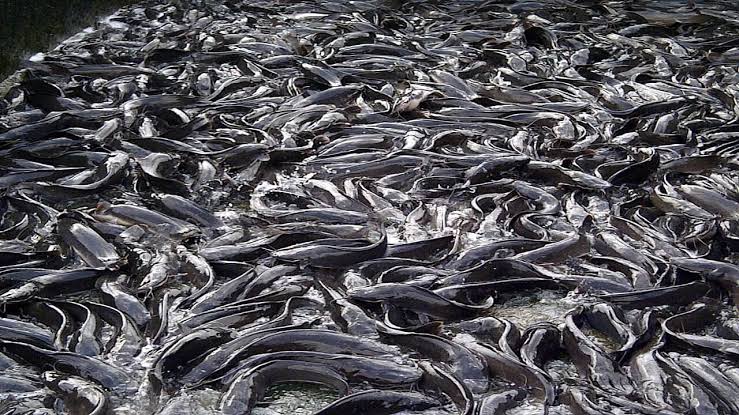
Nigerian Government Urges Increased Aquaculture Investment
By Ahmad Sirajo Makama
Nigeria's Government has called for increased investment in aquaculture to strengthen food security, create employment and promote economic development across participating countries of FISH4ACP.
FISH4ACP is an initiative of the Organisation of African, Caribbean and Pacific States (OACPS).
It is aimed at making fisheries and aquaculture value chains in Africa, the Caribbean and the Pacific more productive and sustainable to contribute to food and nutrition security, economic prosperity and job creation.
Nigeria's Minister of Marine and Blue Economy, Mr Adegboyega Oyetola, who made the call in his opening address at a high-level Roundtable Scaling On Sustainable Catfish Value Chain Transformation in Abuja, said aquatic foods remained important sources of animal protein for millions of people, and urged the need to expand sustainable aquaculture production to meet growing nutritional demands.
He explained that investment in aquaculture had multiplier effects across the economy, creating opportunities for fish farmers, hatcheries, feed manufacturers, processors, suppliers, transporters and traders.
"Expanding domestic fish production is an economic and food security imperative. It offers an opportunity to strengthen domestic food supply, reduce dependence on fish imports, stimulate enterprise development and create sustainable livelihoods across the country,” he said.
He stated that despite the sector's economic importance, a significant gap remained between fish demand and domestic production, requiring coordinated and commercially sustainable investment approaches.
Oyetola emphasised the need to strengthen farmers' capacity, improve access to land and water resources, enhance the quality of fish production and develop infrastructure supporting aquaculture businesses.
"Strategic government support and private-sector participation are essential to unlocking the sector's potential, attracting investment and improving the livelihoods of communities dependent on fisheries".The Minister noted
He urged stakeholders to adopt sustainable approaches that would "improve production capacity, strengthen value chains and position aquaculture as a major contributor to economic growth".
FAO Representative in Nigeria and ECOWAS, Mr Hussein Gadain, said that Nigeria’s annual fish demand stood between 3.2 million and 3.6 million tonnes, with domestic production meeting only one-third.
Gadain said that the country’s fish supply deficit, estimated at 2.4 million tonnes, resulted in annual fish imports exceeding one billion dollars, presenting opportunities for local aquaculture investors.
He identified high feed and energy costs, inadequate quality fingerlings, weak fish-health systems, limited cold-storage facilities and insufficient affordable financing as major constraints affecting aquaculture productivity.
Gadain said that FISH4ACP had supported approximately 3,800 farmers across six pilot clusters, while more than 580 processors adopted improved smoking kilns to enhance efficiency and product quality.
He disclosed that "the programme facilitated over N150 million in initial financing through partnerships with financial institutions, recording full and timely repayment by participating aquaculture producers".
He explained that FAO’s "Hand-in-Hand" Initiative identified an investment requirement of approximately 399.9 million dollars for Nigeria’s fisheries and aquaculture sector, projecting over 496,000 direct and indirect beneficiaries.
Gadain urged financial institutions, government and private investors to establish scalable financing arrangements, support young entrepreneurs and strengthen partnerships to transform Nigeria’s aquaculture industry into a competitive sector.
Also, Technical Adviser, Fish4ACP Legacy, Peter Britz, described Nigeria's aquaculture industry as innovative and outstanding in Africa.
He said his research career began 40 years ago with studies on catfish hatchery technology, making his involvement in Nigeria's aquaculture development particularly rewarding.
He described working with Nigerian fish farmers and communities as one of the most rewarding experiences of his career, commending their willingness to embrace opportunities and improve production.
Britz recalled that Nigeria's catfish industry experienced significant growth, peaking around 2016, before facing challenges including overproduction, COVID-19 and currency depreciation, which affected farmers' profitability and operations.
He said that assessments conducted under the FISH4ACP programme revealed that production in some farmer clusters had declined by "as much as 60 per cent, forcing several farmers out of business".
However, he noted that the industry retained strong fundamentals, including good water resources, experienced farmers, established local markets, consumer preference for catfish and supportive government policies.
Britz emphasised that addressing farmers' narrow profit margins through a value-chain approach was essential to revitalising the industry.
The roundtable was organised under FISH4ACP, a programme supported by the Organisation of African, Caribbean and Pacific States (OACPS), implemented by the Food and Agriculture Organisation of the United Nations (FAO), and funded by the European Union and the German Federal Ministry for Economic Cooperation and Development (BMZ).
Trending Stories
-
 DSS Intercepts Arms Shipment, Recovers 21 AK-47 Rifles
-
 Senate Summons NCC, Telecom Operators Over Network Failures, Deductions
-
 Police Arrest 218 Bandits, Rescue 95 Kidnap Victims
-
 President Tinubu Seeks Approval for N10.79 Trillion Loan
-
 Nigerian Government Urges Increased Aquaculture Investment
-
 Governor Oyetola Secures $200 Million Funding for Fisheries Growth
-
Governor Oyetola Secures $200 Million Funding for Fisheries Growth
-
 NNPC: Kyari Denies Allegations of N210 Trillion Unaccounted Funds
Advertisement