APC Unveils Tinubu’s Five-Year Security Plan
by admin on | 2026-11-16 14:07:44
Share: Facebook | Twitter | Whatsapp | Linkedin Visits: 11
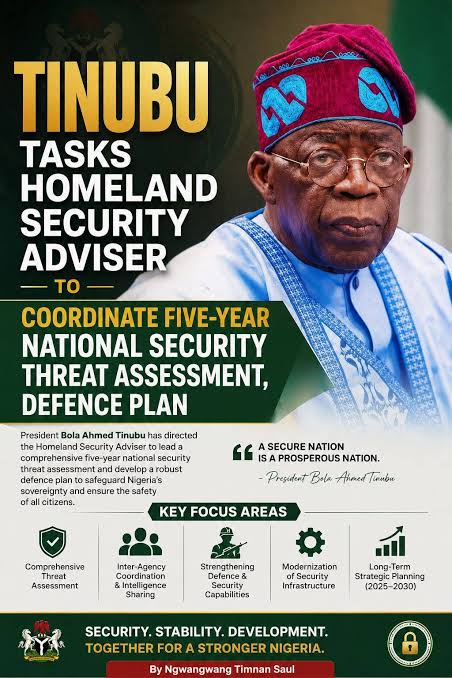
APC Unveils Tinubu’s Five-Year Security Plan
By Muhammad Bala Imam
The All Progressives Congress (APC) Presidential Campaign Council has unveiled President Bola Ahmed Tinubu’s Five-Year Strategic Defence Operations Plan, aimed at ending the 17-year insecurity crisis affecting parts of Nigeria through enhanced military operations, intelligence gathering and coordinated security interventions.
The comprehensive plan is designed to strengthen Nigeria’s security architecture, improve military effectiveness and establish a sustainable framework for confronting terrorism, banditry, kidnapping and other emerging security threats.
In a statement issued on Sunday, the Spokesperson of the APC Presidential Campaign Council, Dr Dele Alake, explained that the initiative would reposition the country’s security system towards a more coordinated, intelligence-driven, technology-enabled and prevention-focused approach to safeguarding lives and property.
The Council explained that the strategic plan provides a long-term framework for aligning national defence priorities, operational requirements, military capability development and expenditure with existing and emerging security challenges.
According to the statement, the plan will also strengthen combat readiness, address critical operational deficiencies, optimise available resources and minimise unnecessary expenditure and wastage by ensuring that security investments respond to clearly identified threats and national priorities.
Military Operations and Insurgents' Surrender
Highlighting the administration's security record, the Campaign Council disclosed that sustained military operations over the past three years had resulted in the elimination of more than 15,000 Boko Haram terrorists and bandits across the country.
It further revealed that over 130,000 Boko Haram fighters and their dependents had surrendered through Operation Safe Corridor, the Federal Government's rehabilitation programme for repentant insurgents.
The Council explained that the figures reflected the administration's two-pronged approach to tackling insecurity through sustained military offensives and non-kinetic interventions aimed at addressing the underlying challenges.
Expansion of Military Formations and Personnel
As part of efforts to strengthen the Nigerian Army's operational capacity, the statement disclosed that President Tinubu had established four new Army divisions and restructured existing military formations to expand operational coverage, decentralise military activities and accelerate responses to security threats nationwide.
The President also approved two additional Army recruitment and training depots in Osogbo, Osun State, and Amasiri-Edda, Ebonyi State, to increase training capacity and fast-track the recruitment of military personnel.
According to the Council, each facility has the capacity to accommodate 6,000 recruits at a time, providing a combined training capacity of 12,000 soldiers.
It disclosed that 5,210 recruits were already undergoing training at the Osogbo facility, with the expansion expected to shorten recruitment turnaround time and increase the availability of trained soldiers for deployment.
Beyond the additional training facilities, President Tinubu approved the recruitment of 28,000 soldiers to reinforce military operations and strengthen troop presence in areas confronting security challenges.
The statement further disclosed that the President had authorised the recruitment of 50,000 additional police officers to enhance internal security, expand policing capacity and improve responses to criminal activities across the country.
Military Infrastructure and Personnel Welfare
The Campaign Council also highlighted ongoing investments in military accommodation, equipment, technology, training and operational infrastructure as part of measures to improve personnel welfare and operational effectiveness.
Among the projects is a 700-unit military barracks in Ikere-Ekiti, Ekiti State, designed to provide suitable residential accommodation, professional working conditions and essential operational facilities for military personnel.
The Council explained that the project would strengthen the military's presence in the area while providing the accommodation and logistical support required for effective operations.
It maintained that the expansion of military formations, recruitment facilities, personnel strength and supporting infrastructure demonstrated the administration's determination to address existing manpower and operational gaps, while ensuring that security personnel were adequately trained, equipped and deployed to vulnerable communities.
Intelligence, Surveillance and Strategic Coordination
On intelligence gathering and security coordination, the Campaign Council explained that the Five-Year Strategic Defence Operations Plan would guide Federal Government investments in national defence through a comprehensive assessment of security threats, operational needs and strategic priorities.
It stated that the framework would strengthen military preparedness, close capability gaps and improve the allocation of resources to ensure greater efficiency in confronting current and anticipated security challenges.
The statement reaffirmed President Tinubu's commitment to developing a coordinated, intelligence-led and technology-driven security system capable of improving military effectiveness, preventing emerging threats and strengthening the protection of lives and communities nationwide.
Trending Stories
-
 Nigeria, South Africa Strengthen Bilateral Relations
-
 NDC Seeks Summit Over Rising Political Violence
-
 APC Unveils Tinubu’s Five-Year Security Plan
-
 Anambra Communal Clash: NEMA Seeks Federal Intervention
-
 Nigerian Government Urges Advertising Industry to Embrace Technology, Creativity
-
 Shettima Seeks Second Term For Tinubu To Complete Reforms
-
 ICPC Recovers ₦5.3 Billion From Seven States, FCT Councils
-
 Akwa Ibom Approves ₦1.2 Trillion 2027 Budget Proposal
Advertisement