Anambra Revenue Service Begins Enforcement Against Tax Defaulters
by admin on | 2026-09-23 10:51:04
Share: Facebook | Twitter | Whatsapp | Linkedin Visits: 41
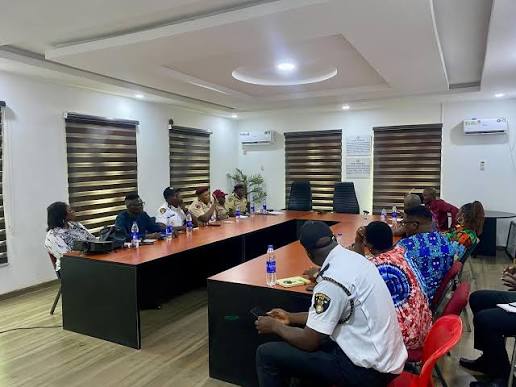
Anambra Revenue Service Begins Enforcement Against Tax Defaulters
By Ahmad Sirajo Makama
The Anambra State Internal Revenue Service (AIRS) has commenced enforcement against taxpayers who failed to regularise their tax affairs, as the state intensifies domestic revenue mobilisation in line with Nigeria’s new tax administration framework.
The Executive Chairman of AIRS, Mr Ikeazor Nnaemeka Okonkwo, disclosed this while briefing journalists at the Revenue House in Awka, saying the enforcement followed months of taxpayer education, engagement and opportunities for voluntary compliance.
“Enforcement has already started. We have now compiled the list of people who have not complied, and we are working through the legal advice on how enforcement will be carried out,” he said.
The development comes under Nigeria’s new tax administration framework, which seeks to strengthen compliance, modernise revenue collection and improve the capacity of governments at the federal, state and local levels to generate sustainable domestic revenue. Okonkwo said AIRS was contributing to the broader reform through expanded taxpayer registration, improved compliance and lawful enforcement.
Okonkwo said taxpayers who had received assessments, demand notices or best-of-judgment assessments still had an opportunity to regularise their affairs, including through an Alternative Dispute Resolution mechanism being established by AIRS.
“We are setting up an Alternative Dispute Resolution process so that taxpayers who have genuine objections can come forward and have those objections considered and discussed,” he said.
He outlined four options for taxpayers: compliant taxpayers should remain compliant; those with valid objections should present them for consideration; taxpayers without valid objections should make the required payments; while those who ignore notices should expect enforcement. “Those who have received notices or assessments and have taken no action should understand that the Anambra Internal Revenue Service will enforce the law fully,” Okonkwo said.
The chairman disclosed that only about 10 per cent of the approximately 500,000 individuals registered under the Anambra State Identification Number (ASIN) system filed their annual tax returns for the 2025 tax year. “If about 90 per cent of registered taxpayers have not filed their annual returns, that is a significant problem,” he said.
Okonkwo said AIRS had used direct communication, media campaigns, churches, town unions, professional bodies and other organisations to educate taxpayers, while the Voluntary Assets and Income Declaration Scheme (VAIDS), which ended on September 5, provided an opportunity to regularise tax affairs. “There is still an opportunity for people to do the right thing, although the VAIDS period has now closed,” he said.
On enforcement, the chairman ruled out violent measures, saying the service would rely on judicial and administrative processes provided under the tax administration framework.
“We are not going to undertake violent enforcement. What we are doing is enforcing what the law says we should enforce. It will be clean, legal and supported by the law,” he said.
Okonkwo said AIRS was targeting one million registered and actively engaged taxpayers from the inherited database of about 500,000, describing the expansion of the tax base as a major mandate of his administration. He also appreciated Governor Chukwuma Charles Soludo for the administration’s support and commitment to strengthening tax administration and improving the state’s capacity to generate revenue for development.
“The mandate is very clear: we need to expand the tax base. If we have one million taxpayers who are actively engaged and paying their taxes based on their income, that will significantly expand the tax base,” Okonkwo said.
He stressed that personal income tax was imposed on income rather than business revenue and that assessments should reflect taxpayers’ actual earnings and supporting records.
“There is no situation where someone is expected to pay income tax they did not make,” Okonkwo said, adding: “Nobody is being targeted vindictively. It is about fairness. An efficient tax system can only work when we know who is paying and ensure that compliant taxpayers are not placed at a disadvantage.”
Trending Stories
-
 INEC Records Over 103 Million Registered Voters Ahead 2027 Elections
-
 Aircraft Accident: NAF Activates Search, Rescue Operation
-
 NGF Mourns Victims of Nigerian Air Force Aircraft Crash
-
 Customs Warns Against Petroleum Smuggling, Vows Relentless Enforcement
-
 Zulum Commissions 86km Roads, Bridge Projects in Gombe
-
 Yari Can Secure Tinubu’s Zamfara Victory, Yarima Says
-
 NPA Moves to Boost Nigeria’s Non-Oil Exports, Forex Inflows
-
 Army Establishes New Formations in Four States, Tinubu Says
Advertisement