Nigeria Unveils Strategy to Transform Education Digitally
by admin on | 2026-11-18 12:19:34
Share: Facebook | Twitter | Whatsapp | Linkedin Visits: 3
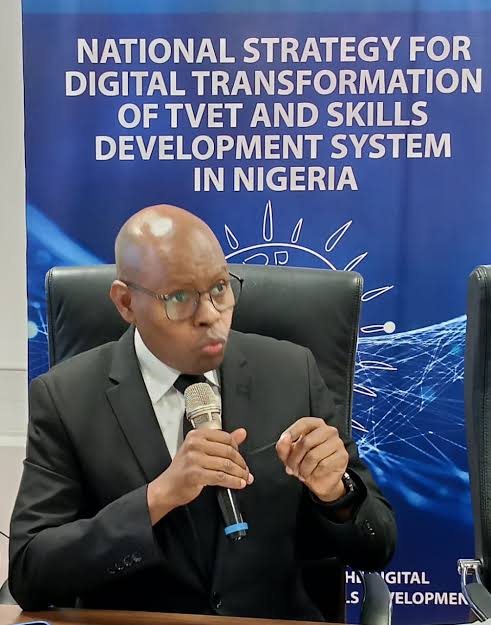
Nigeria Unveils Strategy to Transform Education Digitally
By Maryam Muhammad
Nigerian Government has unveiled the nation's first National Education Technology (EdTech) Strategy to drive digital transformation and improve teaching and learning across the country.
The Minister of Education, Dr Tunji Alausabin, said the strategy would provide a unified framework for integrating technology into teaching, learning and educational administration at all levels.
Alausa said the strategy is a partnership with the Federal Ministry of Education and the Federal Ministry of Communications, Innovation and Digital Economy.
He said the framework would coordinate investments in digital infrastructure, learning platforms and teacher development across basic, secondary, tertiary and non-formal education.
According to him, the strategy will consolidate the Federal Government’s investments in educational technology and ensure that interventions deliver measurable improvements in learning outcomes.
“Today, it’s not just about unveiling. It’s a national framework, a common framework to improve teaching, expand learning opportunities, and strengthen educational management across all tiers of our education system,” he said.
The minister stressed that technology should not only expand access to education but also improve the quality of teaching and learning.
“We need to use technology to improve education, deliver education, and not just deliver education, but to ensure that the quality of education is significantly improved,” he said.
Alausa, however, identified poor internet connectivity in underserved communities as a major challenge to the successful implementation of the strategy.
He particularly highlighted riverine communities in the Niger Delta, saying improved connectivity would enable pupils in remote areas to access digital learning resources.
The minister recalled discussions with the Minister of Communications, Innovation and Digital Economy, Dr Bosun Tijani, on efforts to extend internet connectivity to schools in the Niger Delta.
He said nationwide connectivity was essential to ensuring that learners were not excluded from technology-driven education because of their geographical locations.
The World Bank Country Director, Matthew Verghis, said artificial intelligence and other emerging technologies were reshaping the global economy, workplace and education system.
Verghis said Nigeria must equip learners with relevant digital skills while strengthening foundational competencies in literacy and numeracy to prepare them for changing global demands.
He identified digital literacy, critical thinking, creativity and continuous learning as essential skills for students to adapt to technological changes and contribute to economic development.
He said artificial intelligence and digital learning platforms could help teachers address learners’ diverse needs, provide timely feedback and improve access to educational materials.
However, he cautioned against treating technology as a replacement for teachers, stressing that its primary role should be to strengthen their effectiveness.
“Their promise is not to replace teaching, but to strengthen teaching and human relationships at the heart of education,” he said.
Verghis said the effectiveness of educational technology should be measured by its impact on learning outcomes rather than the availability of digital devices and platforms.
“The question is not simply what technology can do, but how it can help more learners learn better,” he said.
He also called for appropriate safeguards to ensure that emerging technologies protected learners, promoted inclusion and preserved human judgment in educational decisions.
The World Bank official warned that without deliberate efforts to address access gaps, digital transformation could deepen existing inequalities and further disadvantage children in underserved communities.
He reaffirmed the World Bank’s commitment to supporting Nigeria’s education and human capital development agenda.
The strategy was developed in partnership with the World Bank and the Mastercard Foundation.
It is expected to guide the deployment of digital solutions across the education sector, with emphasis on improving teaching effectiveness, expanding access to learning resources and strengthening the capacity of teachers and educational institutions.
Trending Stories
-
 Fani-Kayode Raises Concerns Over Killings of Nigerians in South Africa
-
 World Bank Identifies $4 Trillion Financing Gap For Developing Countries
-
 Tinubu’s 2027 Re-Election Campaign Gains Momentum in Anambra
-
 Tinubu Approves Kebbi Inland Dry Port Operations
-
 Nigeria Unveils Strategy to Transform Education Digitally
-
Nigeria Unveils Strategy to Transform Education Digitally
-
 Telecommunications: Nigeria Re-elected to ITU Council
-
 Nigerian Army Trains Officers For Entrepreneurship After Military Service
Advertisement