Reps Present Third Anniversary Legislative Scorecard
by admin on | 2026-07-07 11:22:47
Share: Facebook | Twitter | Whatsapp | Linkedin Visits: 49
Reps Present Third Anniversary Legislative Scorecard
By Ahmad Sirajo Makama, Abuja
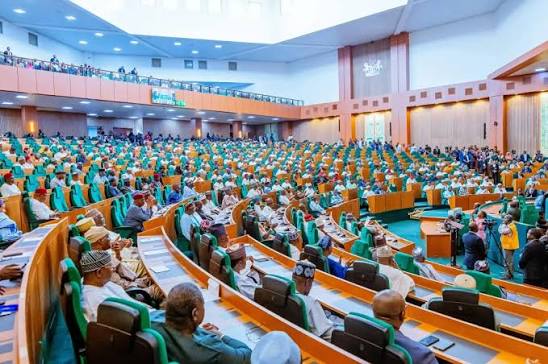
The House of Representatives has released its third anniversary report, which emphasizes the legislative activities undertaken since its establishment in June 2023.
The House disclosed that it introduced a total of 2,747 bills between June 2023 and June 15, 2026, with 363 successfully passed into law.
The figures were unveiled during a media briefing by the Chairman of the House Committee on Rules and Business, Francis Ejiroghene Waive, and the House Spokesman, Akin Rotimi Jr., as part of activities marking the third legislative session of the 10th National Assembly.
A breakdown shows that 1,351 bills were introduced during the first session, comprising 12 Executive Bills, 1,336 Private Member Bills and three Senate Bills, with 89 passed.
In the second session, lawmakers introduced 912 bills, including 14 Executive Bills, 868 Private Member Bills and 30 Senate Bills, out of which 148 were passed.
The third session recorded 484 new bills, made up of 31 Executive Bills, 391 Private Member Bills and 62 Senate Bills. A total of 126 bills were passed within the period.
The House further revealed that of the 2,747 bills introduced, 1,782 are awaiting second reading, 323 have been referred to standing committees, 185 are awaiting consideration, while five were negatived. In addition, 89 bills were consolidated before consideration.
It was also noted that 48 petitions had been considered and adopted following committee reports.
Waive said the legislative output over the past three years reflects the House’s commitment to impactful lawmaking.
“We are working, and this is our scorecard for this session,” he said.
He identified key legislation passed during the third session to include the 2026 Appropriation Act, the constitutional amendment bill on state police and the Electoral Act 2026.
He also listed major laws enacted since inauguration, including the Student Loan (NELFUND) Act and the Minimum Wage Act, among others aimed at improving citizens’ welfare.
Responding to allegations that lawmakers pay to have bills listed, Waive dismissed the claim, attributing it to a misinterpretation of remarks by a member. He explained that sponsoring a bill requires consultations and lobbying rather than financial inducement.
“I have never encountered such a practice,” he said.
On constitutional amendments, Waive clarified that the proposed state police amendment is separate from amendments to the Police Act, which would provide the operational framework once constitutional approval is secured.
He said the House would consider the Senate’s version during the fourth session as part of the concurrence process.
Earlier, Rotimi said the briefing underscores the House’s commitment to transparency ahead of the National Assembly Open Week. He noted that a broader performance report covering committee activities would be presented during the event.
Rotimi added that several bills passed have already made a measurable impact, citing the student loan scheme, which he said has benefited over 1.6 million Nigerians with more than ₦303 billion disbursed.
He also commended the Public Accounts Committee for recovering over 61.5 billion dollars in unremitted oil revenues and more than ₦520 billion in outstanding VAT obligations as of the end of 2025.
The spokesman assured that the House would prioritise key constitutional amendments in the fourth session, including proposals on independent candidacy, single-day elections and other electoral reforms.
“The total number of bills introduced and passed by this Assembly is the highest since 1999. We still have more work to do, but we have covered significant ground,” he said.
On motions, the House disclosed that 220 were presented between June 2025 and June 2026, with 192 referred to committees, 28 to ad hoc committees and 121 raised as matters of urgent public importance.
It added that 48 public petitions were considered during the third session, underscoring its oversight and public engagement roles.
The House leadership said the figures reflect the productivity of the 10th Assembly, with Private Member Bills accounting for the majority of proposed legislation since June 2023.
Trending Stories
-
 CCC Calls for Stronger Intelligence-Driven Operations
-
 Customs Partners With Afreximbank to Improve Intra-African Trade
-
 Niger Moves to Domesticate Women Economic Empowerment Policy
-
 Kwara Monarch Offers Blessings for APC Candidates
-
 Reps Present Third Anniversary Legislative Scorecard
-
 Army Day: Rivers Reaffirms Support for Security Agencies
-
 Tinubu Backs Judiciary Infrastructure to Deepen Democracy
-
 Nigeria Leads Push for Stronger African Military Cooperation
Advertisement