INEC to Deploy 1.4m Ad-Hoc Personnel for 2027 Elections
by admin on | 2026-08-19 11:44:02
Share: Facebook | Twitter | Whatsapp | Linkedin Visits: 32

INEC to Deploy 1.4m Ad-Hoc Personnel for 2027 Elections
By Ahmad Sirajo Makama, Abuja
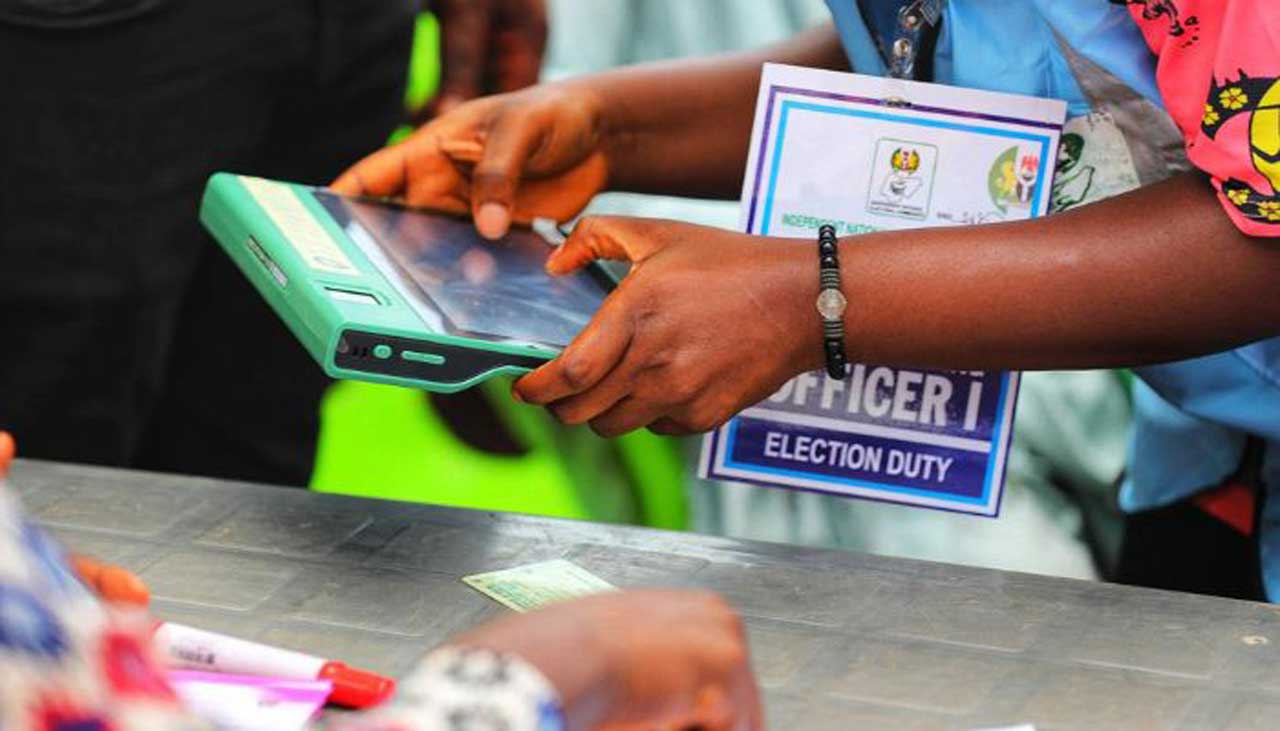
The Independent National Electoral Commission (INEC) says it plans to deploy about 1.4 million ad-hoc personnel across more than 176,000 polling units nationwide for the 2027 General Election.
The INEC Chairman, Prof. Joash Amupitan, disclosed this while receiving a Pre-Election Assessment Mission (PEAM) delegation of the International Republican Institute (IRI), led by its President, Dan Twining, at the Commission’s headquarters in Abuja.
Amupitan said INEC’s operational roadmap for the 2027 election includes continuous voter registration and a voter register audit using the Automated Biometric Identification System (ABIS) to eliminate duplicate records.
He said the Commission was also expanding logistics arrangements with transport unions to ensure polling units opened promptly at 8:30 a.m. nationwide.
According to him, INEC is enhancing access to polling units and providing assistive devices for Persons with Disabilities (PWDs), pregnant women, nursing mothers and elderly voters.
The chairman said the visit coincided with a pivotal point in the electoral calendar, coming three days after the Osun State off-cycle governorship election and a day before the official commencement of campaigns and rallies for the 2027 General Election.
He said recent off-cycle elections, including those in Ekiti and Osun states, as well as several legislative by-elections, had served as operational stress tests for the Commission’s technology, logistics and security coordination.
Amupitan noted that the Bimodal Voter Accreditation System (BVAS) and the INEC Result Viewing (IReV) portal had recorded upload rates of above 98 per cent in recent elections.
He identified insecurity, localised electoral violence, vote-buying, hate speech, disinformation and Foreign Information Manipulation and Interference (FIMI) as key threats to voter confidence.
The chairman said the Commission works with the Inter-Agency Consultative Committee on Election Security (ICCES), the Economic and Financial Crimes Commission (EFCC) and the Independent Corrupt Practices and Other Related Offences Commission (ICPC) to enforce electoral laws and prosecute offenders.
Amupitan described international observation missions as institutional partners rather than critics, assuring the delegation of INEC’s transparency and cooperation ahead of the IRI’s International Election Observation Mission (IEOM) for the 2027 election.
He reiterated that INEC had no preference for any political party or candidate, stressing that its mandate was to deliver a free, fair, credible, transparent and inclusive election that reflected the will of Nigerians.
Earlier, Twining commended the Commission for the successful conduct of the 2026 Osun State Governorship Election and praised Nigerians for their continued commitment to democracy.
“We know from our history of working here how committed Nigerians are to exercising their democratic rights. We saw and witnessed it. Very vigorous people here are really determined to make every vote count,” he noted.
He said the international community was keen to support Nigeria’s preparations for the 2027 election.
“We are here to hear from you how you’re planning before the elections, your outlook, your forecast, some of your concerns and anything that we, as the international community, can do to support a peaceful, credible and democratic election,” he said.
INEC Urges Parties to Make 2027 Campaigns Issue-Based
At the signing of the First National Peace Accord on Issue-Based Campaigns for the 2027 General Election in Abuja, Amupitan called on presidential candidates and political parties to make the campaigns a contest of ideas rather than a battle of hostilities.
Speaking at the event held at the International Conference Centre, the INEC chairman said electoral contests in a constitutional democracy were not total wars but competitive job interviews before the electorate.
He urged candidates to make the 2027 campaign a marketplace of ideas rather than a theatre of war.
Amupitan said Nigerians deserved clear, concrete and measurable manifestos on how political parties intended to drive economic growth, strengthen national security, expand infrastructure, improve healthcare, modernise education and promote social inclusion.
He described the signing of the accord as a significant departure from politics of character assassination, identity manipulation and inflammatory rhetoric, noting that Nigeria’s challenges were too great for the election cycle to be spent in bitterness.
The chairman said INEC’s moral authority to demand decorum from political actors rested on its administrative and technological preparedness.
He disclosed that the Commission was scaling up its operational logistics to manage a nationwide ad-hoc workforce of 1.4 million personnel across more than 176,000 polling units for the 2027 polls.
He, however, warned that technological safeguards and institutional efficiency could not substitute for political decorum, stressing that a process compromised by incitement, private armed squads or digital disinformation would fail long before Election Day.
Amupitan urged candidates and party leaders to extend the spirit of the accord to their state supporters, local government executives, ward canvassers and grassroots supporters.
He said leadership attained at the expense of public peace, institutional integrity or human life was a hollow victory.
He restated that INEC had no interest in who won or lost any election, assuring that the Commission would remain an impartial umpire and ensure a level playing field for all contestants.
In his remarks, the Chairman of the National Peace Committee, General Abdulsalami Abubakar (rtd.), represented by General Martin Luther Agwai, said the Issue-Based Campaign Peace Accord was first established in 2019 to promote political campaigns and rallies based on issues rather than sentiment.
He said the accord called on political parties and candidates to compete fairly on ideas, policies and programmes, debate opposing views respectfully, mobilise supporters peacefully, protect voters, respect electoral institutions and reject hate speech, incitement and misinformation.
Agwai said the National Peace Committee had, since 2015, facilitated 30 peace accords, comprising five at the national level ahead of the 2015, 2019 and 2023 general elections and 25 at the sub-national level, alongside independent peace architecture established in 23 states.
He disclosed that the committee operated an Election Security Information Hub, which monitors electoral offences and broader security developments and produces regular threat assessments to support early warning, preventive engagement and evidence-based decision-making.
Agwai appealed to political parties, candidates, campaign councils and spokespersons to campaign on issues of concern to Nigerians, avoid spreading false information, promote tolerance for differences of opinion and comply with the spirit and letter of the accord.
The signing ceremony was attended by presidential candidates and running mates for the 2027 General Election, National Commissioners of INEC and the Secretary to the Commission, national chairmen of registered political parties, heads of security agencies, representatives of the diplomatic corps and civil society organisations.
The official campaign period for the 2027 General Election commenced today, August 19, 2026, in line with INEC’s timetable and schedule of activities for the election.
Trending Stories
-
 Security Operatives Rescue 20 Abducted Prospective NYSC Members
-
 Bago to Flag Off ₦1.5tn Lambata-Kontagora Highway Reconstruction
-
 FG Releases Eight-Month Allowance To Non-Academic Tertiary Staff
-
 Niger Appoints Kontagora Emir As 2027 Amirul Hajj
-
 NSDC Commends Oyo Sugar Factory On Commissioning Milestone
-
 Southwest Muslims Target ₦1bn For Education, Empowerment
-
 An Informed Electorate Can Change Nigeria’s Future
-
 Wike Recalls Orbih’s Role in His 2015 Rivers Victory
Advertisement